Le photographe Thomas Nicolon et les mystères des éléphants de forêt dans le Parc National de Conkouati Douli
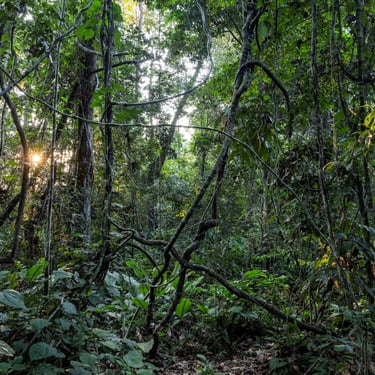
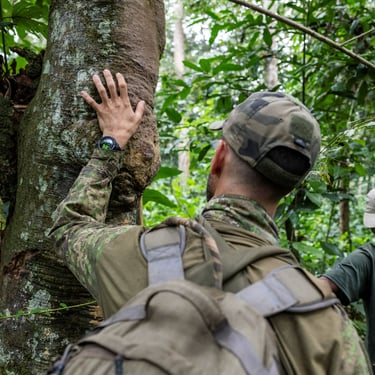
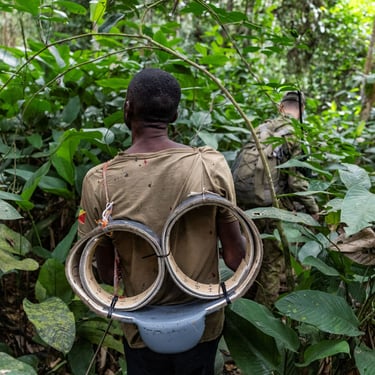
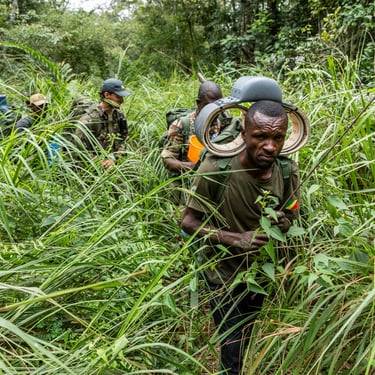
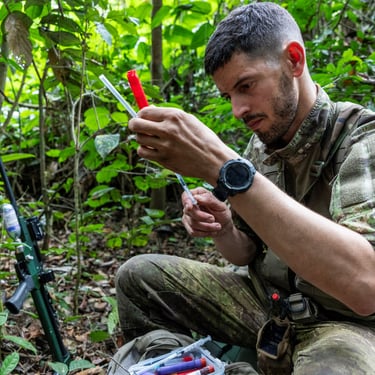
Au cœur des forêts denses du Parc National de Conkouati Douli, le photographe Thomas Nicolon s’est joint à une équipe spécialisée composée de pisteurs et du vétérinaire Dr. Richard Harvey pour une mission délicate : la pose de colliers émetteurs sur les insaisissables éléphants de forêt. Témoin privilégié de cette opération scientifique, il a documenté le pistage et l'interaction complexe avec ces géants méconnus. Au-delà de la documentation technique, ses images capturent l'atmosphère unique de la forêt équatoriale. Dans l'entretien qui suit, le photographe revient sur cette immersion, livrant un témoignage sur les émotions intenses et les ressentis éprouvés derrière l’objectif, au plus près de la faune sauvage.
English version below
C’était la première fois que vous suiviez une opération de pose de colliers sur des éléphants. Pouvez-vous nous raconter ce que vous avez ressenti en découvrant cette mission sur le terrain ?
C’était l’une des initiatives les plus extraordinaires que j’ai eu la chance de photographier. J’ai été impressionné par le professionnalisme du vétérinaire et des pisteurs. De mon côté je faisais de mon mieux pour suivre leurs instructions et prendre les meilleures images possible.
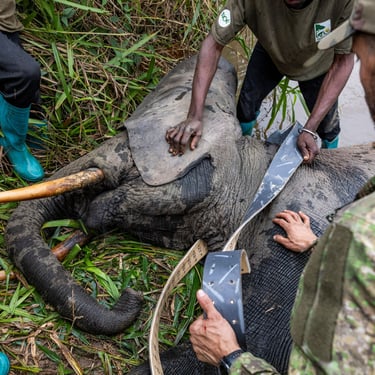
C’était totalement unique de voir des éléphants endormis sur le sol de la forêt. On pouvait les toucher et entendre leurs ronflements, alors qu’ils sont si difficile à observer dans des circonstances normales.
J’ai été émerveillé, j’ai été ému, mais j’ai aussi eu peur ! Cette opération comprends des risques pour nous et pour les éléphants, et l’atmosphère est parfois stressante lorsque l’on piste un éléphant qui est tout proche. Il faut essayer d’anticiper sa réaction lorsqu’il sera touché par la flèche du vétérinaire. Le mieux est de grimper à un arbre !
Avant de partir, comment vous êtes-vous préparé à ce type de reportage, à la fois technique, scientifique et très particulier ?
Je me suis préparé en lisant des rapports sur des opérations de pose de colliers effectuées dans d’autres aires protégées. J’en ai aussi parlé avec des amis qui avaient eu l’occasion de suivre des opérations similaires par le passé. J’ai emporté le matériel photo qui me semblaient le plus adapté, et j’ai longuement échangé avec le vétérinaire avant de partir en forêt. Je voulais comprendre sa manière de travailler et surtout écouter ses consignes afin de ne pas entraver son travail.
Qu’est-ce qui vous a le plus surpris pendant l’opération — que ce soit du côté des éléphants, de l’équipe, ou de l’ambiance sur le terrain ?
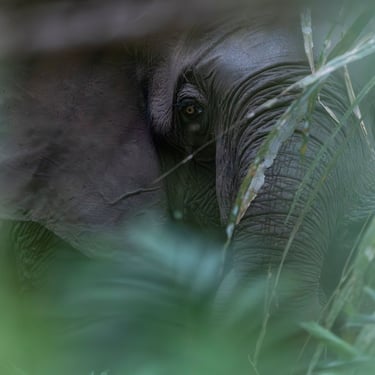
Ce qui m’a le plus surpris c’est de constater à quel point les éléphants sont indétectables dans la forêt dense pour le commun des mortels - malgré leur taille et leur poids. Pourtant j’ai l’habitude de travailler avec des éléphants de forêt. Nous étions par exemple à quelques mètres du premier éléphant rencontré, et je n’aurais jamais su qu’il était là si j’avais été seul. En ce qui concerne le deuxième éléphant qui a bénéficié de la pose d’un collier, il était entouré de 5 autres individus au moment où les pisteurs on trouvé sa trace, et je n’avais rien vu ni entendu. Et pourtant ils étaient là, autour de nous.
Y a-t-il un moment précis que vous garderez en mémoire, une scène ou une émotion forte que vous avez vécue pendant cette mission ?
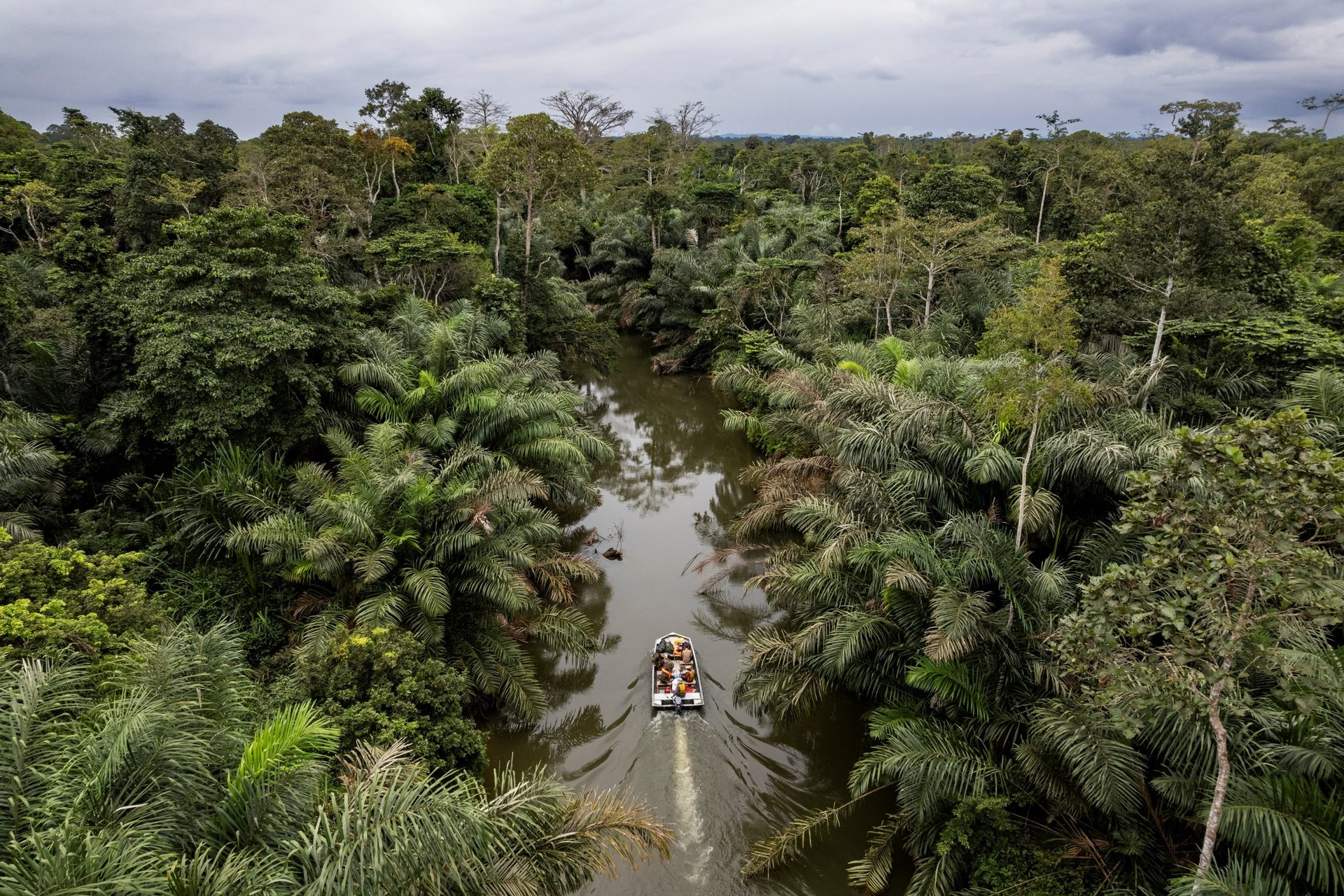
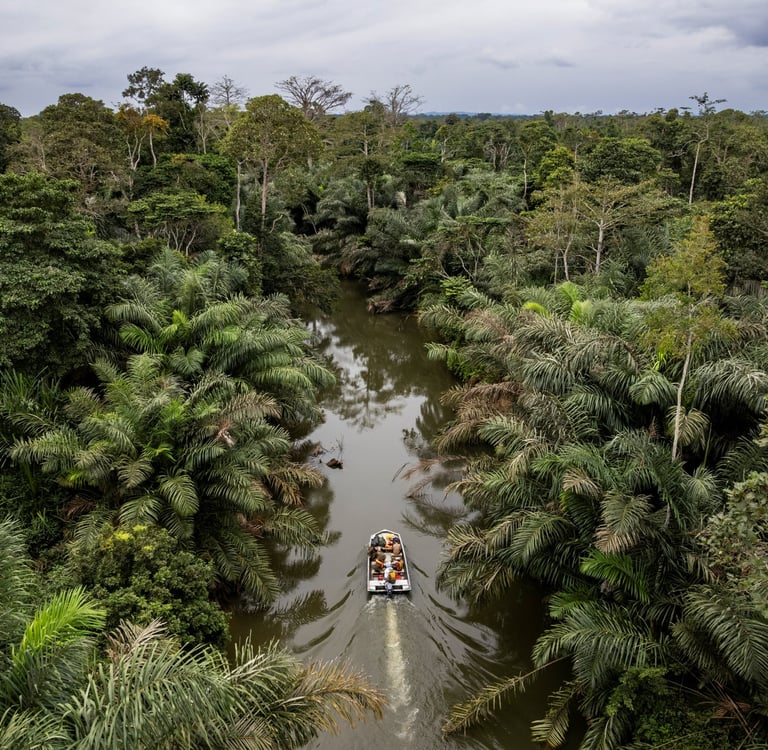
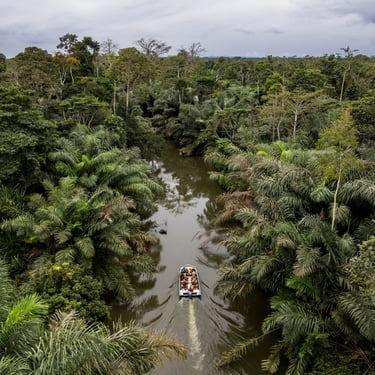
Je me souviendrais toujours du réveil du premier jeune mâle anesthésié par Harvey, le vétérinaire : nous étions cachés à une vingtaine de mètres, et nous attendions fébrilement de voir s’il allait venir vers nous après s’être relevé, ou partir dans le sens opposé. J’avais envoyé le drone au-dessus de lui juste avant le réveil, donc j’ai pu suivre sur mon écran ses mouvements et ses hésitations. Je l’ai vu finalement traverser la rivière et s’enfoncer dans la forêt. C’était émouvant et stressant à la fois.
En tant que photographe, comment avez-vous abordé ce reportage : quelles étaient vos priorités visuelles ou narratives pour raconter cette histoire ?
J’ai préparé cela comme un reportage pour un magazine : il fallait que tous les aspects de la mission soient documentés, afin que les images se suffisent à elles-mêmes pour raconter l’histoire.
Le travail dans un environnement sauvage comme le Parc National de Conkouati Douli comporte sans doute des défis. Quels ont été les plus grands obstacles ou difficultés que vous avez rencontré ?
Chaque aire protégée comporte ses difficultés, et Conkouati ne déroge pas à cette règle. Ici, les éléphants sont bel et bien présents, mais difficiles à observer et à photographier. J’ai monté et descendu la rivière maintes fois en espérant y voir un éléphant en plaine baignade, mais je n’ai pas eu cette chance. Pourtant les berges étaient pétries d’empreintes fraîches ! Je peux aussi mentionner la poussière des savanes de Conkouati qui m’a fait pousser quelques cheveux blancs pour mon matériel.
Selon vous, quelle est l’importance de documenter ce type d’opération en images ? Quel message souhaitez-vous transmettre au public à travers vos photos ?
C’est essentiel pour moi de documenter ce genre d’opérations. D’abord parce que ça me fascine, mais aussi parce que ça me permet de continuer à donner davantage de visibilité aux éléphants de forêt, qui restent très méconnus du grand public. Mais c’est aussi important de montrer l’importance de la science et de la recherche. Je crois que les images montrent le pourquoi du comment du travail de recherche sur le terrain, avec la sueur et les risques que cela comprend
Si vous deviez résumer cette mission en un mot ou une image, lequel choisiriez-vous ?
En un mot : émerveillement. Une image :
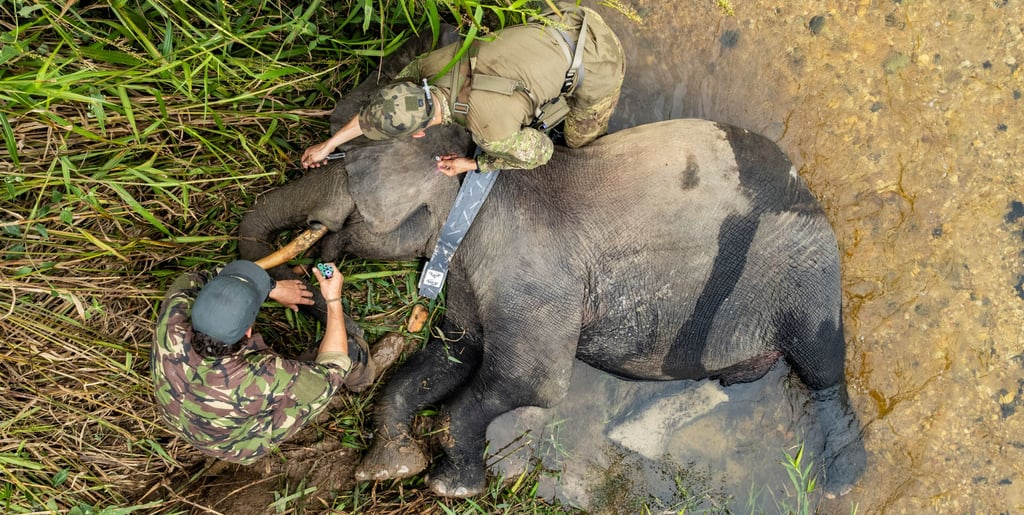
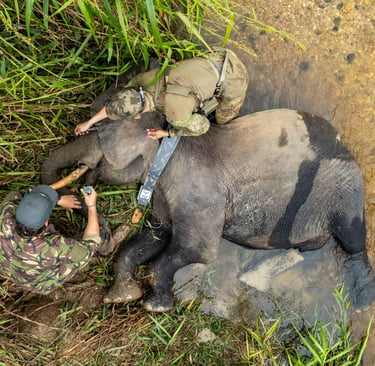
© Thomas Nicolon
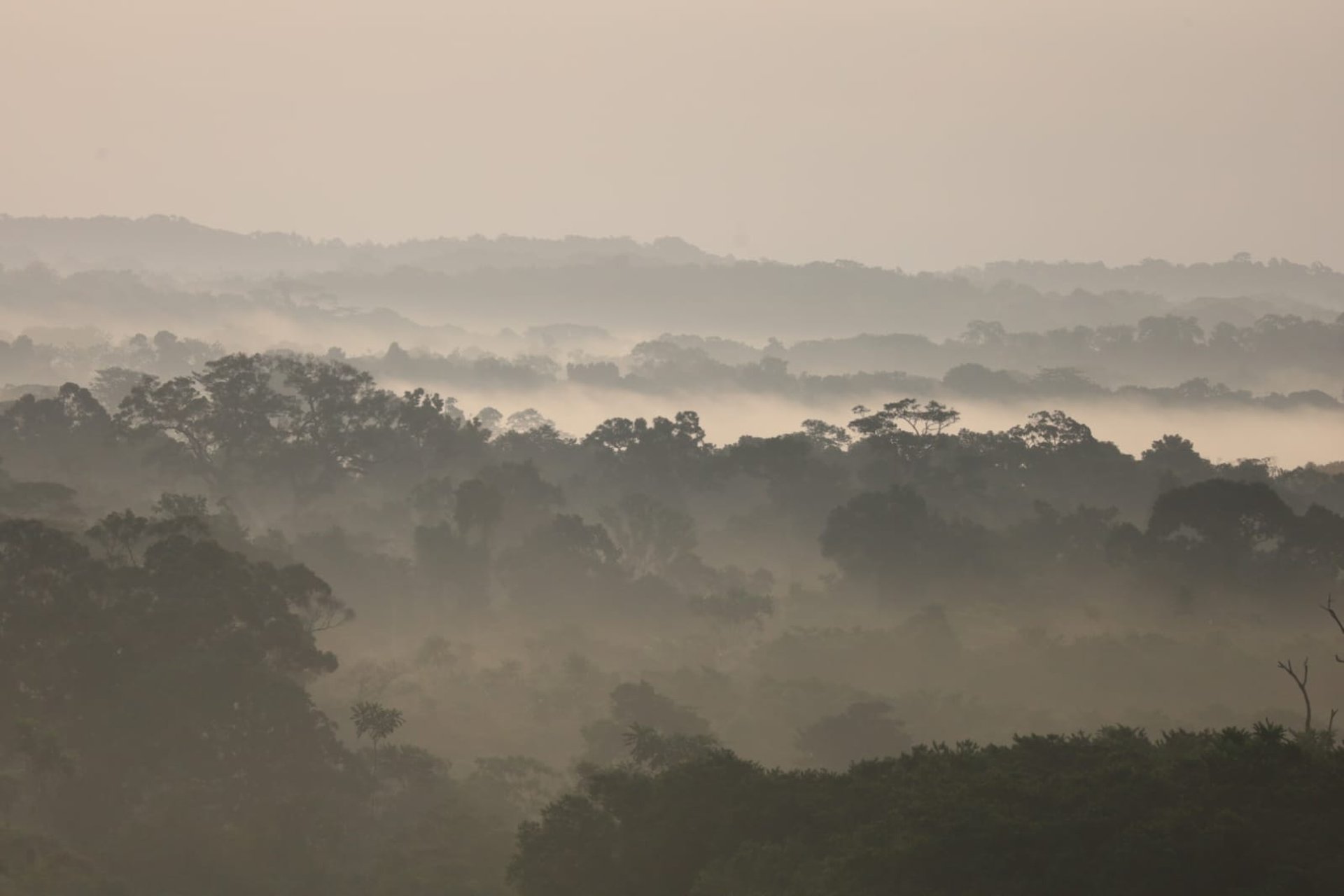
© Thomas Nicolon
Photographer Thomas Nicolon and the mysteries of forest elephants in Conkouati Douli National Park
In the heart of the dense forests of Conkouati Douli National Park, photographer Thomas Nicolon joined a specialized team of trackers and the wildlife vet Dr. Richard Harvey for a delicate mission: fitting tracking collars on the elusive forest elephants.
As a privileged witness to this scientific operation, he documented the pursuit and the complex interaction with these little-known giants. Beyond the technical documentation, his images capture the unique atmosphere of the equatorial forest. In the following interview, the photographer reflects on this immersion, sharing an account of the intense emotions and feelings experienced behind the lens, up close with the wildlife.
Alice Paghera-Messager, ecotourism & marketing manager & Thomas Nicolon, conservation photographer, film-maker and reporter
It was the first time you followed an elephant collaring operation. Can you tell us what you felt when discovering this mission in the field?
It was one of the most extraordinary initiatives I’ve ever had the chance to photograph. I was deeply impressed by the professionalism of the veterinarian and the trackers. On my side, I did my best to follow their instructions and capture the best possible images. It was truly unique to see elephants lying asleep on the forest floor. You could touch them and hear them snoring — a surreal experience, given how hard they are to observe under normal circumstances. I was amazed, moved, but also scared! This kind of operation carries risks — both for us and for the elephants — and the atmosphere can be tense when tracking an elephant nearby. You have to anticipate how it might react when hit by the veterinarian’s dart. The best thing to do then is to climb a tree!!
Before leaving, how did you prepare for such a technical, scientific, and unusual assignment?
I prepared by reading reports from collaring operations carried out in other protected areas. I also spoke with friends who had followed similar missions in the past. I brought the photographic equipment that seemed most suitable and had long discussions with the veterinarian before heading into the forest. I wanted to understand his way of working and, above all, listen to his instructions so as not to interfere with his job.
What surprised you the most during the operation — whether about the elephants, the team, or the atmosphere in the field?
What struck me the most was realizing how completely undetectable elephants can be in dense forest — despite their size and weight. And yet, I’m used to working with forest elephants. For example, we were just a few meters away from the first elephant we encountered, and I would never have known it was there if I had been alone. As for the second elephant that was collared, it was surrounded by five others when the trackers found its trail, and I hadn’t seen or heard a thing. And yet, they were there, all around us.
Is there a particular moment that will stay in your memory — a scene or a strong emotion you experienced during this mission?
I will always remember the awakening of the first young male anesthetized by Harvey, the veterinarian: we were hiding about twenty meters away, anxiously waiting to see whether he would come toward us once he stood up or head in the opposite direction. I had sent the drone above him just before he woke up, so I could follow his movements and hesitation on my screen. I saw him finally cross the river and disappear into the forest. It was both moving and stressful.
As a photographer, how did you approach this assignment — what were your visual or narrative priorities to tell the story?
I approached it as if it were a magazine report: every aspect of the mission needed to be documented so that the images alone could tell the story.
Working in a wild environment like Conkouati Douli National Park certainly comes with challenges. What were the biggest obstacles or difficulties you faced?
Every protected area has its challenges, and Conkouati is no exception. Here, elephants are indeed present, but very hard to observe and photograph. I went up and down the river many times hoping to see one bathing in the open, but I wasn’t that lucky — even though the riverbanks were covered in fresh tracks! I can also mention the dust of Conkouati’s savannas, which gave me a few grey hairs worrying about my equipment.
In your opinion, what is the importance of documenting such operations through images? What message do you hope to convey to the public through your photos?
It’s essential for me to document this kind of operation. First, because it fascinates me, but also because it helps bring more visibility to forest elephants, which remain largely unknown to the general public. It’s also important to highlight the role of science and research. I believe images can show the why and how of field research — with all the sweat and risks it involves.
If you had to sum up this mission in one word or one image, what would it be?
In one word: wonder. In one image:
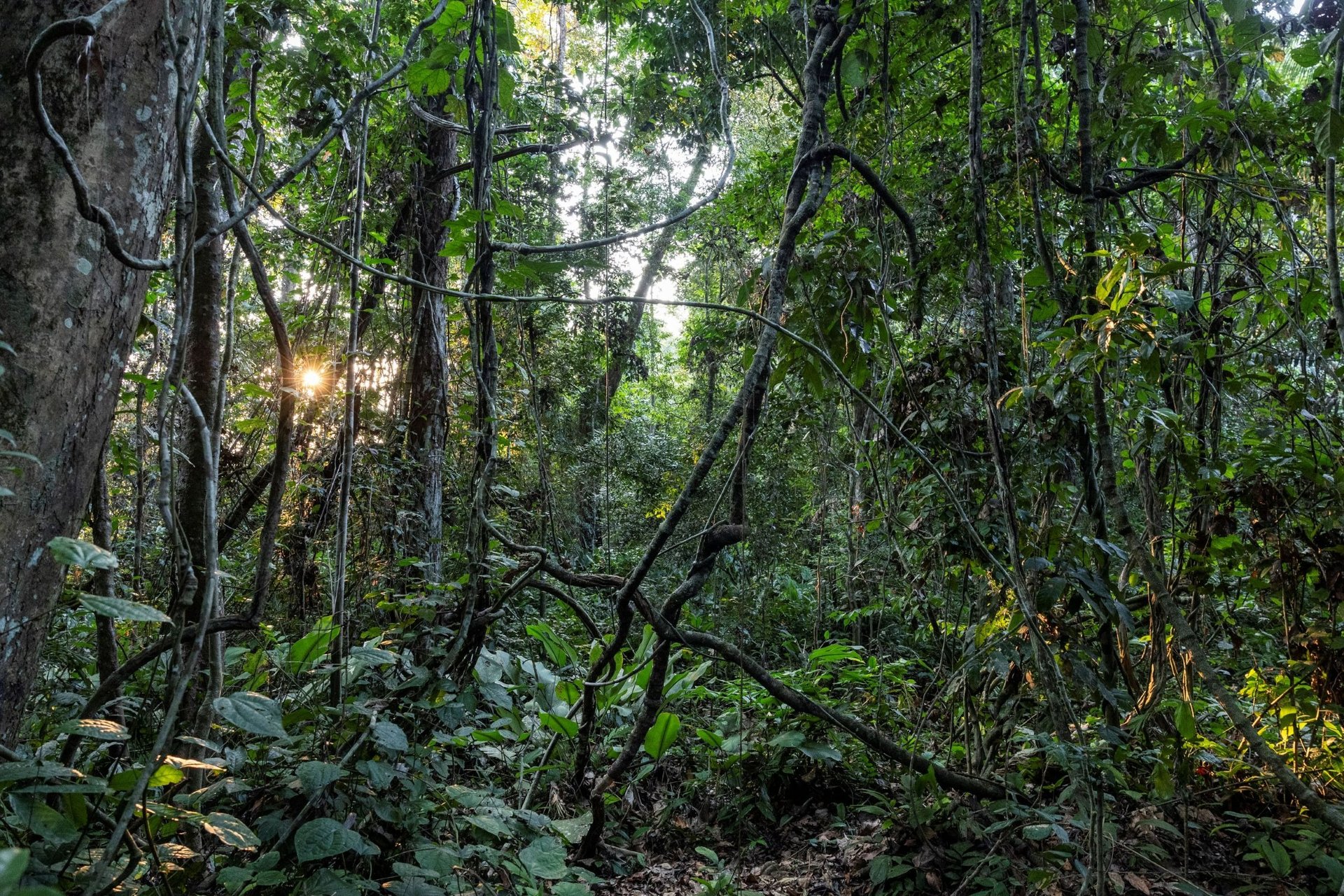
© Thomas Nicolon
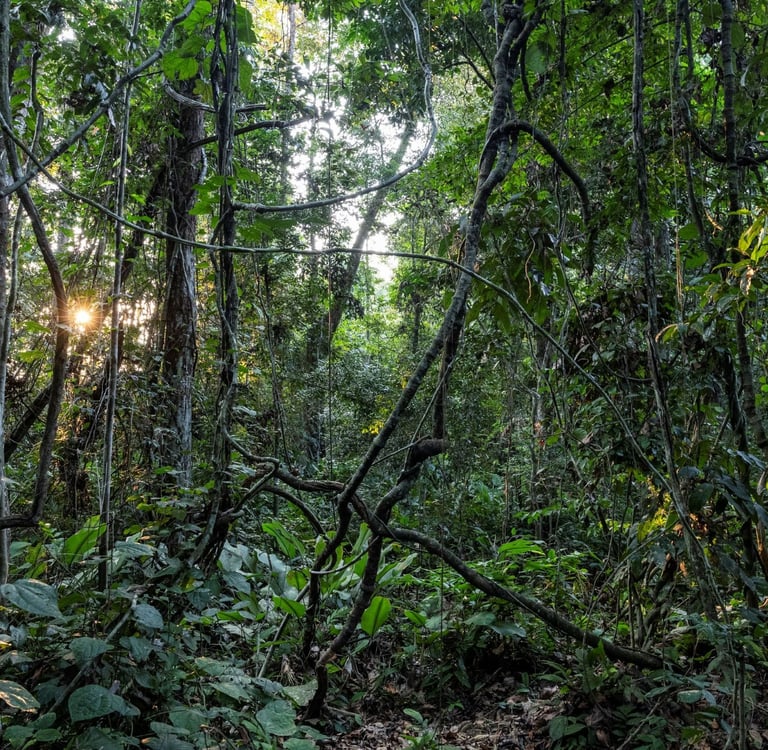
© Thomas Nicolon
Toutes les photographies de cet article ont été réalisées par Thomas Nicolon pendant sa mission au Parc National de Conkouati Douli
Adresse bureau de liaison
48 Avenue Ngouedi (derrière les assurances AGC)
Centre Ville, Pointe Noire