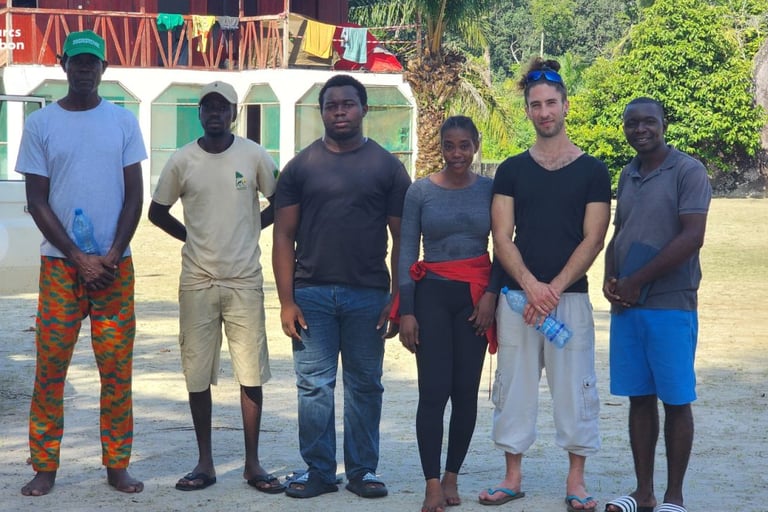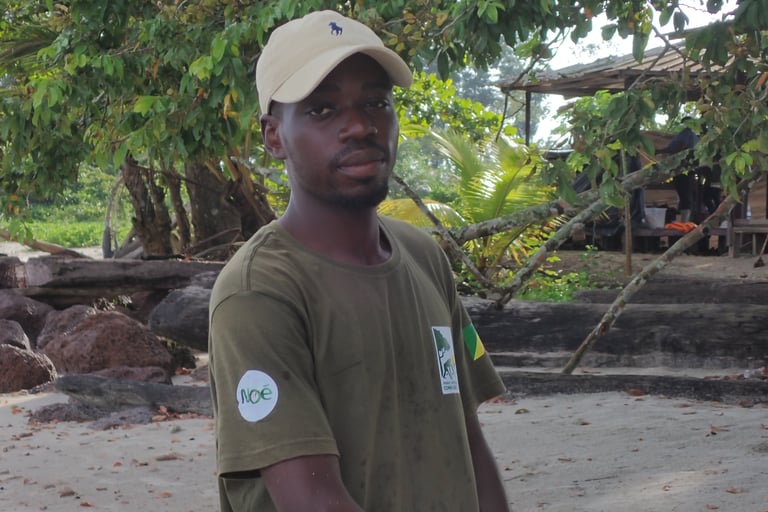
Retour d’expérience de Prince MAKITA sur la formation ECOTROP 2026 au Gabon
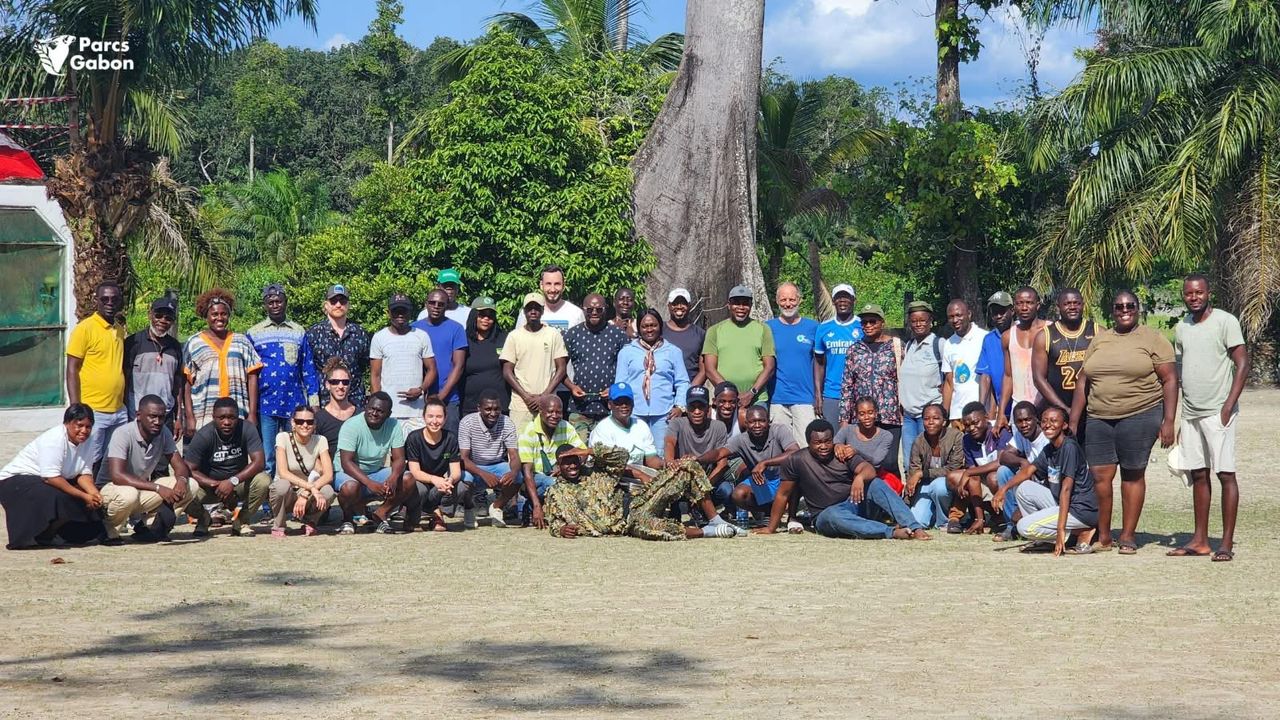
Prince Makita, Assistant de Recherche Marine au Parc National de Conkouati-Douli, a récemment participé à la 10ᵉ édition d’ECOTROP, une école de terrain internationale organisée au Gabon autour du thème des écosystèmes littoraux et des mangroves. Cette formation immersive a réuni étudiants, chercheurs et professionnels venus d’Afrique et d’Europe afin de partager leurs connaissances et leurs expériences à travers des travaux de terrain, des analyses scientifiques et des échanges interdisciplinaires.
English version below
Qu’est-ce qui vous a motivé à participer à la formation ECOTROP 2026 au Gabon ?
C'est mon responsable au sein du Parc National de Conkouati-Douli, Yorick Van Hoef, qui m'a fait découvrir ECOTROP. Dès que j'ai compris la portée internationale de cette école et sa capacité à réunir des profils aussi divers et complémentaires, j'ai immédiatement souhaité y participer. Passionné par la recherche marine, je souhaitais renforcer mes compétences, notamment dans l’analyse et l’interprétation des données de terrain ainsi que dans la structuration d’une publication scientifique.
Quels étaient les principaux thèmes abordés au cours de cette immersion scientifique ?
La formation couvrait un large éventail de thématiques : le benthos (ensemble des êtres vivants qui vivent sur le fond ou dans les sédiments des milieux aquatiques), les communautés de poissons, la microbiologie, les micromammifères, la contamination au mercure, le suivi des tortues marines ainsi que l’écologie thermique des crabes fantômes. Chaque sujet était abordé avec une réelle rigueur méthodologique, permettant de mieux comprendre le fonctionnement global des écosystèmes côtiers.
Vous avez notamment travaillé sur l’écologie thermique des crabes fantômes et le suivi des tortues marines. Que vous ont apporté ces travaux ?
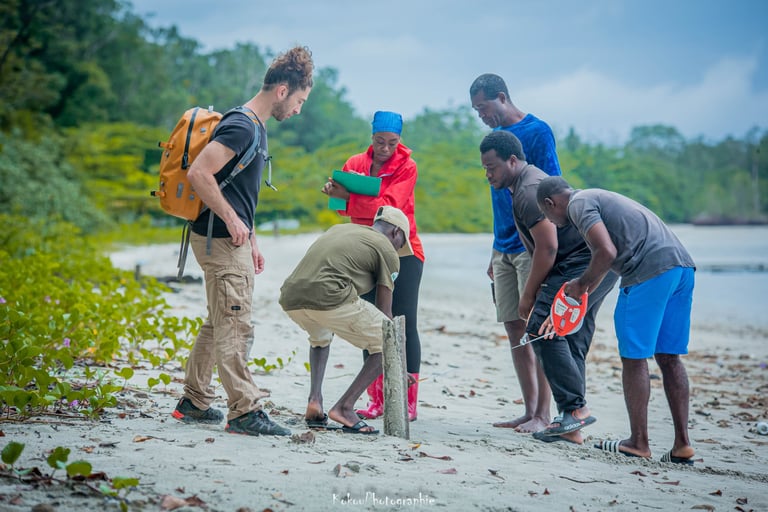
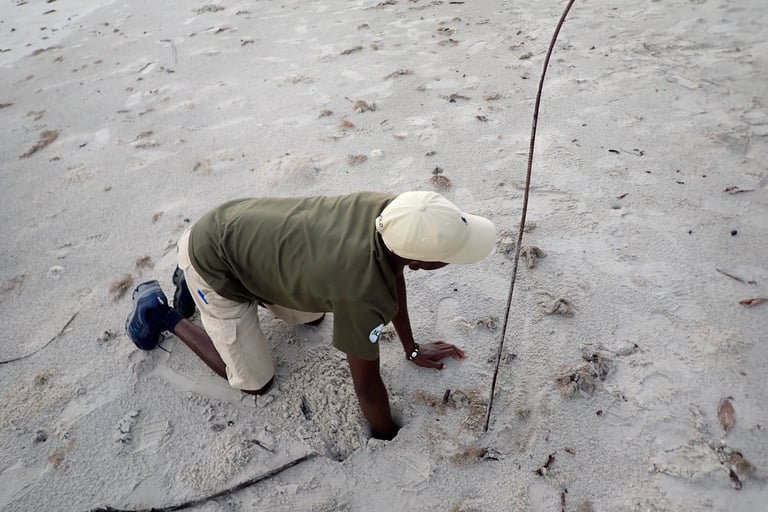
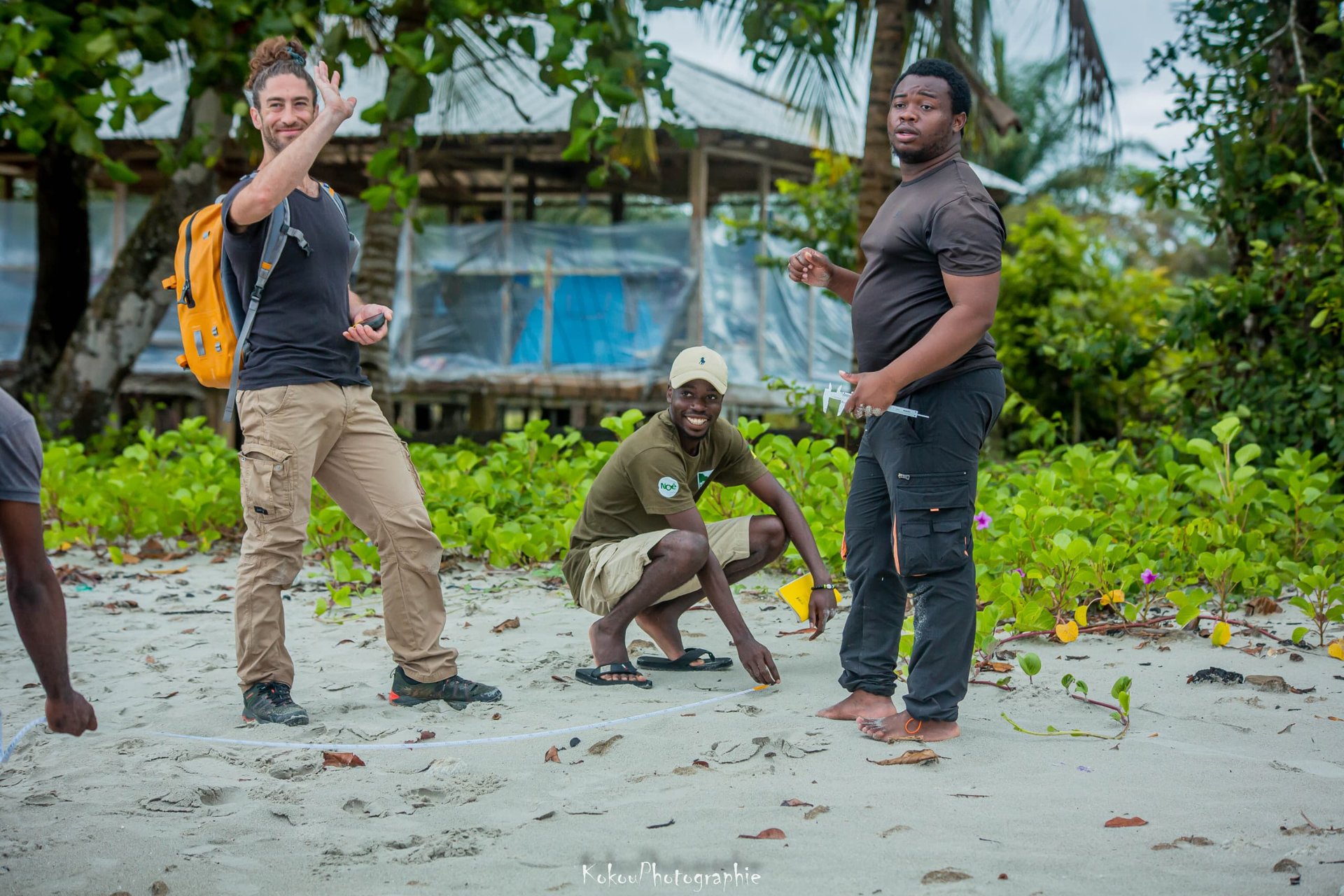
Les crabes fantômes ( Ocypode cursor qui est un petit crabe de plage vivant dans des terriers creusés dans le sable) ont été pour moi une véritable découverte. Ces espèces sentinelles permettent de comprendre comment un milieu réagit aux perturbations environnementales. Associés au suivi des tortues marines, ces travaux m’ont montré à quel point le suivi d’espèces ciblées constitue un outil précieux pour évaluer la résilience des écosystèmes côtiers face aux pressions croissantes.
Qu’avez-vous appris sur le suivi scientifique des tortues marines ?
Cette expérience m’a permis de me familiariser avec des protocoles rigoureux et standardisés : identification des individus, relevé des traces de ponte et suivi nocturne sur les plages. J’ai également compris l’importance du suivi à long terme pour mieux connaître ces espèces et évaluer l’efficacité des actions de conservation mises en œuvre.
Quelles nouvelles compétences avez-vous développées au cours de cette formation ?
La formation m’a permis de renforcer mes capacités à structurer et standardiser des protocoles de recherche et de monitoring scientifique. J’ai également développé mes compétences en collecte et analyse de données, tout en apprenant à travailler dans une équipe multidisciplinaire où chaque expertise contribue à une meilleure compréhension des écosystèmes étudiés.
En quoi cette expérience sera-t-elle utile pour les activités de recherche au Parc National de Conkouati-Douli ?
À court terme, je souhaite contribuer à améliorer les protocoles de suivi existants au sein du parc afin de les rendre plus rigoureux et harmonisés. À plus long terme, cette expérience permettra de renforcer les capacités de recherche du parc et de développer de nouvelles collaborations scientifiques autour des enjeux de conservation marine et côtière.
Quel message souhaiteriez-vous transmettre au public sur l’importance de la recherche scientifique pour la protection des écosystèmes côtiers ?
La mangrove et le littoral rendent des services essentiels aux populations et à la biodiversité. Pourtant, ces écosystèmes restent fragiles et soumis à de nombreuses pressions. La recherche scientifique permet de comprendre leur fonctionnement, d’identifier les menaces qui les affectent et de guider les décisions de conservation. Protéger ces milieux, c’est aussi protéger notre avenir.
Un mot de la fin : comment résumeriez-vous cette expérience en une phrase ?
Une aventure extraordinaire, riche d’apprentissages, de rencontres et d’échanges inspirants, qui renforce encore davantage mon engagement pour la recherche et la conservation des écosystèmes marins.
Prince MAKITA feedback on the ECOTROP 2026 training programme in Gabon
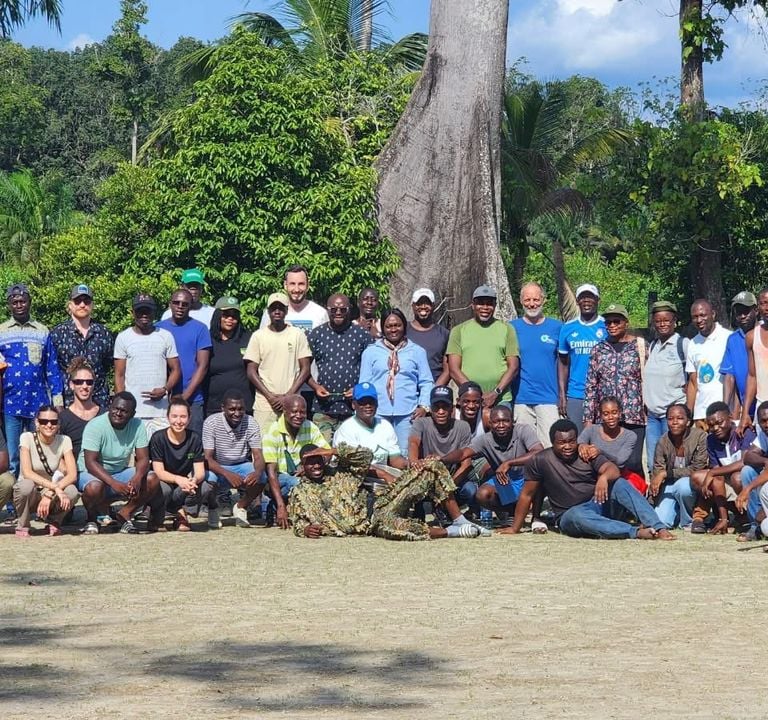
Prince Makita, Marine Research Assistant at Conkouati-Douli National Park, recently participated in the 10th edition of ECOTROP, an international field school held in Gabon and focused on coastal and mangrove ecosystems. This immersive programme brought together students, researchers and professionals from Africa and Europe to share knowledge, field experience and scientific approaches through practical research activities and interdisciplinary exchanges.
Maryleine Louemba, Marketing and Communication Assistant & Prince Makita, Marine Research Assistant
June 2026
What motivated you to participate in the ECOTROP 2026 training programme in Gabon??
It was my supervisor at Conkouati-Douli National Park, Yorick Van Hoef, who first introduced me to ECOTROP. As soon as I discovered the international scope of the programme and its ability to bring together such diverse and complementary profiles, I immediately wanted to take part. I am passionate about marine research, but I also felt the need to strengthen certain skills, particularly in analysing and interpreting field data and in structuring scientific publications. Beyond these specific objectives, I also saw it as an opportunity to confirm my vocation in the field while working alongside experts and peers who share the same commitment to conservation and research.
What were the main topics covered during this scientific immersion ?
The training covered a very broad range of topics, which is what made it so enriching. We worked on benthic communities (organisms that live on, in, or near the bottom of aquatic environments), fish assemblages, microbiology, small mammals, mercury contamination, marine turtle monitoring and the thermal ecology of ghost crabs. Each topic was approached with strong methodological rigour, using appropriate protocols and reflecting on their long-term applicability. What struck me most was how all these disciplines complement one another to provide a coherent and comprehensive understanding of coastal ecosystem health.
You worked in particular on the thermal ecology of ghost crabs and marine turtle monitoring. What did these activities teach you about coastal ecosystems ?
Working on ghost (Ocypode cursor crustacean that lives on sandy beaches, where it digs burrows) crabs was a real discovery for me. It is not a subject I would have naturally chosen, yet it turned out to be one of the most memorable parts of the training. These so-called sentinel species concentrate signals of ecosystem degradation and help us understand how coastal environments respond to disturbances. Combined with marine turtle monitoring, this work convinced me that studying targeted species is one of the most effective and sustainable ways to assess the resilience of coastal ecosystems facing increasing environmental pressures.
What did you learn about marine turtle monitoring and the methods used to study these species ?
Marine turtle monitoring introduced me to rigorous and standardised observation protocols, including individual identification, nesting track surveys and night patrols on nesting beaches. Beyond the methods themselves, what really stood out to me was the long-term nature of this work. Marine turtles cannot be understood through a few field outings; monitoring requires years of commitment, discipline and continuity. It gave me a valuable perspective on what a truly science-based conservation programme involves.
What new scientific or technical skills did you develop during this training?
This training allowed me to reach a new level in several areas. I am now better equipped to structure and standardise research and monitoring protocols for different themes, including marine turtles, fish, microbiological pollution, benthic communities and mercury contamination. I also developed a more proactive approach to data collection while learning how to work efficiently within an interdisciplinary team where every expertise contributes to a broader understanding of the ecosystem. Finally, the presentation exercises gave me practical tools for communicating scientific results clearly and effectively, which is just as important as fieldwork itself.
How will you apply these new skills to your research activities at Conkouati-Douli National Park ?
In the short term, my main objective is to improve existing monitoring protocols within the park by making them more rigorous and standardised. I would also like to develop new research themes, particularly around sentinel species and environmental contamination, while strengthening the technical capacities of the park’s staff. In the longer term, I hope to contribute to making Conkouati-Douli a recognised reference site for marine research in Central Africa, supported by published data, international collaborations and scientific visibility that reflects the richness of its ecosystems.
What message would you like to share with the public about the importance of scientific research for protecting coastal ecosystems ?
Mangroves and coastal ecosystems provide essential services to millions of people, from protecting shorelines against storms to serving as nurseries for fish and storing carbon. Yet they are disappearing quietly, often without us fully realising what is being lost. Scientific research helps make visible what cannot always be seen with the naked eye. It allows us to document environmental changes before it is too late and to base conservation decisions on evidence rather than assumptions. Protecting these ecosystems means protecting biodiversity, livelihoods and our shared future.
Finally, if you had to summarise this experience in one sentence, what would you say ?
An extraordinary adventure filled with learning, laughter and meaningful encounters — the kind of experience that stays with you long after it ends and that I would gladly do again without hesitation.
Certaines photos ont été prises par Kokou Photographie et le Parcs Gabon